
Top-Rated Products For Seamless Sewer System Installations
Equip yourself with leading sewer installation products designed for efficiency, durability, and ease of integration into your projects.
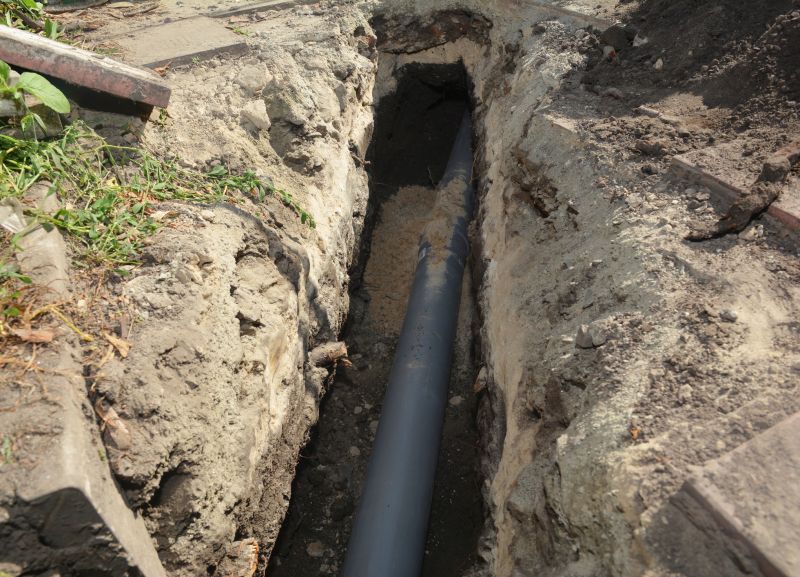 Installing a sewer system requires careful selection of the right products to ensure proper function, durability, and compliance with local codes. From pipes and fittings to pumps and accessories, the array of products available can be overwhelming for both DIY enthusiasts and professionals. Understanding the different types of components and their specific roles can help in planning and executing an efficient sewer installation.
Top Overall Option
Flexible Sewer Pipe System
A flexible sewer pipe system offers adaptability and ease of installation, making it suitable for various terrain and layout configurations. These systems typically feature durable, corrosion-resistant materials that can accommodate slight shifts in ground or building movement, reducing the risk of leaks or breaks. They often come with comprehensive fittings and connectors that simplify assembly and ensure a secure seal. While installation can be straightforward, it is important to follow manufacturer instructions carefully to maintain system integrity and compliance with local standards.
Types of Products For Sewer System Installations
PVC Sewer Pipes
PVC pipes are lightweight, easy to cut, and resistant to corrosion, making them a popular choice for underground sewer lines.
Cast Iron Pipes
Known for durability and sound insulation, cast iron pipes are often used in commercial or high-traffic areas.
ABS Sewer Pipes
ABS pipes offer impact resistance and are suitable for underground and above-ground applications.
Flexible Corrugated Pipes
Ideal for challenging terrains, these pipes are easy to install and adapt to ground shifts.
Septic Tank Accessories
Includes inlet and outlet baffles, inspection ports, and risers for septic system maintenance.
Pump Stations
Pumps help move waste in systems where gravity flow is insufficient, such as in hilly or high-rise locations.
Cleanouts and Inspection Chambers
Facilitate access for inspection, cleaning, and maintenance of sewer lines.
Fittings and Connectors
Various elbows, tees, reducers, and couplings designed to join pipes securely and create a leak-proof system.
Waterproof Sealants and Adhesives
Ensure watertight connections between pipe sections and fittings.
Gravel and Backfill Materials
Support underground pipes and aid in proper drainage and stabilization.
Manholes
Provide access points for inspection and maintenance of underground sewer lines.
Air Admittance Valves
Help vent sewer gases safely and prevent pressure build-up within the system.
Drainage Pumps
Assist in removing excess water or waste in areas with poor natural drainage.
Flexible Couplings
Allow for movement and expansion, reducing stress on joints.
Inspection Cameras
Enable detailed inspection of sewer lines from the surface for early detection of issues.
Popular Choices
Widely used for their ease of installation and resistance to corrosion, these pipes are commonly chosen for residential sewer lines.
Available in various shapes and sizes to create secure, leak-proof joints in sewer systems.
Provide easy access for inspection and maintenance of septic tanks without excavation.
Designed for high-efficiency waste removal in challenging locations or systems with limited gravity flow.
Popular for flexible underground drainage and sewer applications, especially in uneven terrains.
Trending for their ability to quickly identify blockages or damage within sewer lines.
Facilitate easy access for cleaning and inspection, reducing maintenance time.
Commonly used for access points in sewer networks, allowing for inspection and repairs.
Increasingly popular for venting sewer gases efficiently in compact or complex systems.
Assist in directing flow and preventing solids from exiting the tank prematurely.
Chosen for their ability to accommodate ground movement and ease of installation.
Effective for moving waste in systems where gravity alone cannot ensure flow.
Provide quick, non-invasive access points for system monitoring.
Ensure secure, watertight connections across various pipe and fitting types.
Commonly used to support underground pipes and promote proper drainage.
A typical sewer system involves several key elements including pipes for waste conveyance, connectors and fittings to join sections securely, and specialized pumps for managing waste in challenging terrain or high-rise structures. Proper installation also depends on selecting materials that resist corrosion and withstand soil conditions. Additionally, accessories such as cleanouts and inspection chambers facilitate maintenance and troubleshooting.
Choosing the right products involves considering factors like pipe diameter, material compatibility, ease of installation, and compliance with local building codes. Whether installing a new system or repairing an existing one, it is essential to prioritize quality and compatibility to prevent future issues. Consulting product specifications and manufacturer guidelines can provide valuable insights into the suitability of each component for your specific project.
With a comprehensive understanding of the available products and their applications, you can approach sewer system installation with confidence. Proper planning and selection of reliable, compatible components contribute to a system that functions efficiently and requires minimal maintenance over time.
Key Buying Considerations
- Compatibility with existing sewer components and local building codes
- Material durability and resistance to corrosion or soil conditions
- Appropriate pipe diameter for flow capacity and future expansion
- Ease of installation, especially for DIY projects
- Type of pipe material suited for underground or above-ground use
- Availability of fittings and connectors for seamless assembly
- System pressure requirements and venting options
- Access points such as cleanouts or inspection chambers for maintenance
- Pump capacity and suitability for waste volume and terrain
- Sealing quality to prevent leaks and odors
- Backfill and support materials to stabilize underground pipes
- Compatibility with septic or municipal sewer systems
- Cost considerations and long-term maintenance requirements
- Ease of future repairs or modifications
- Environmental factors such as soil type and groundwater level